
IMSA is honored to have valuable guests who shall be keynote speakers and will share their significant expertise via the conference
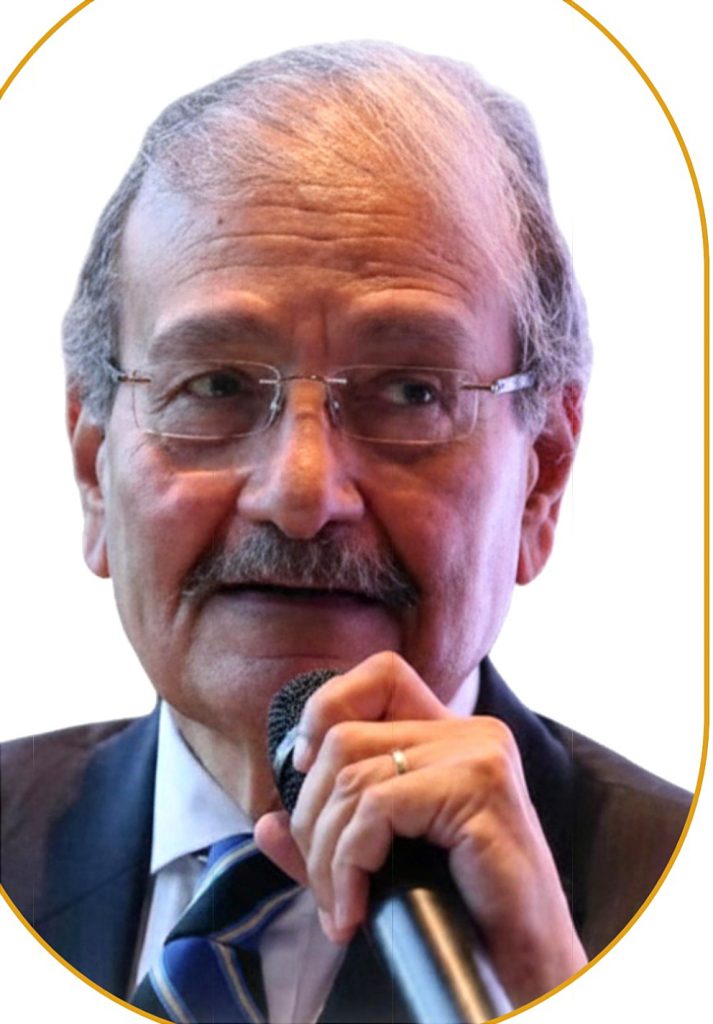
Prof Dr M S S El Namaki
Prof El Namaki is a graduate of the universities of Brussels (Ph. D, 1977), Erasmus (MA, 1967) and MIT (Executive Program, 1982). Prof El Namaki teaches and consults artificial intelligence, strategic thinking, entrepreneurship and international business. He is past founder and Dean of the Maastricht School of Management (MSM), Maastricht, The Netherlands (1984-2002). He is now Dean of Artificial Intelligence Technologies, Canada (ait-ai.org), among several other deanships in , among others, the UK. Prof El Namaki has developed and introduced management degree programs (MBA, EMBA, DBA and Ph. D) at institutions in the Netherlands, China, Egypt, Brazil, Poland, Kazakhstan, Syria and Indonesia, among others. Prof El Namaki taught globally at as recognized institutions as MSM (Maastricht), Kellog (Chicago), Jiao Tong University (Shanghai), Beijing University (Beijing), AIT (Bangkok), Helsinki School of Economics (Helsinki), Sheffield University (Sheffield) and several others. Prof El Namaki assumed executive positions within Philips (Eindhoven), McKinsey (London and Dar es Salaam) and Time Inc. (Amsterdam). Prof El Namaki consulted and delivered executive seminars on a wide scale and his clients included Fortune 500 companies as DuPont, Philips and Pepsi as well as landmark national corporations as China Pacific Insurance Corporation CPIC (Shanghai), Eastern Tobacco (Egypt) and Abraaj (United Arab Emirates).c
Prof El Namaki published 10 books and more than 100 articles. His recent publications focus on the frontiers of artificial intelligence. A book “Strategic thinking in the age of artificial intelligence” and Macmillan’s ‘“New Strategic Management “. Prof El Namaki received government awards and recognitions from the governments of China, Malaysia and Egypt among others.
From Artificial Intelligence to brain wars
Abstract
Artificial intelligence is becoming an amorphous whole. The concept, the tools, the applications, the investment, and the outlook are going through a process of evolution. The hardware is evolving in search of newer processes, novel material, boundaryless capacities and better performance. The software is trying to cope with changing fundamentals, market demand, and the search for efficient fulfillment. Technology is trying to cope with identified advances with unknown outlooks. One of those known advances with unknown outlooks is brain wars. The concept is recent and seems to gain a prominent place in current AI frameworks especially with reference to hostile behavior. What are brain wars and how does AI induce brain rooted hostile behavior will be the focus of the following article. The keynote starts with a set of definitions starting with AI as a system and ending with brain war. Analytical issues as weaponizing the brain and how does data analytics contribute to brain wars will be explored. A pierce through the future follows. And a set of hypotheses is developed. Analysis is qualitative. Outcomes are hypotheses for future research.
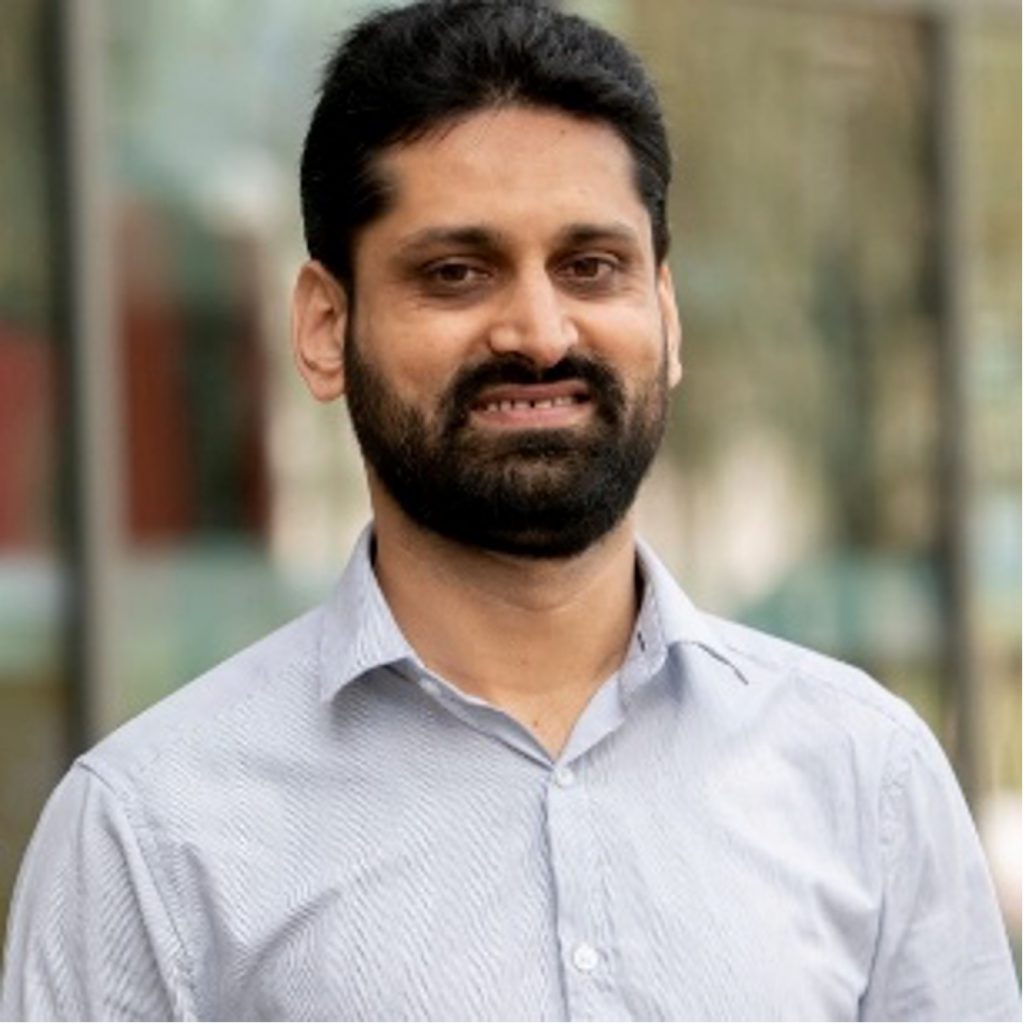
Dr. Mohsin Bilal
Dr. Mohsin Bilal is an Associate Professor at Prince Sattam bin Abdulaziz University (PSAU), Saudi Arabia, where he leads the AI & Complexity Research Group. A computer scientist by training, Dr. Bilal’s research focuses on the cutting edge of digital health, specifically developing pathology foundation models and autonomous AI agents for cancer diagnosis and stratification. His career includes key roles at the University of Warwick’s Tissue Image Analytics Centre (TIACentre) and the PathLAKE Centre of Excellence, where he contributed to transformative AI methods for computational pathology. Beyond his faculty role at PSAU, he serves as an Honorary Research Associate at the University of Warwick and is a member of the Scientific Committee of the Asian Society of Digital Pathology. Dr. Bilal’s work is widely recognized in high-impact literature, with publications in top-tier journals including The Lancet Digital Health, Medical Image Analysis, Gut, npj Precision Oncology and the British Journal of Cancer.
AI Evolution: From Foundation Models to AI Agents
Case Studies in Tissue Image Analytics
Abstract
Artificial intelligence is evolving from static predictive models toward evidence-based systems capable of reasoning, tool use, and adaptive decision support. This keynote traces that evolution through the lens of tissue image analytics, moving from task-specific deep learning to foundation models and emerging agentic systems. The central thesis is that frontier AI achieves clinical value only when translated into reliable workflows that are validated by evidence, robust to real-world variation, and governed by human expertise.
The talk first reviews how deep learning advanced computational pathology through supervised representation learning, while highlighting critical limitations in dataset specificity, scanner variation, and population shift. We then examine foundation models as “capability engines”, reusable frameworks that provide general representations but require rigorous adaptation to meet clinically meaningful endpoints. Using colorectal cancer as a primary case study, we illustrate how foundation-model embeddings support microsatellite instability (MSI) screening and genetic mutation prediction from routine H&E whole-slide images. These examples demonstrate that performance is heavily representation-dependent, requiring benchmarking strategies that compare complex neural adaptation against linear probing baselines. Finally, we explore the shift toward agentic AI, framing “agents” as comprehensive workflow systems that integrate memory, planning, feedback loops, and human-in-the-loop guardrails. We highlight emerging applications, including image-to-report generation and research agents. The keynote concludes that the future of the field lies not in total autonomy, but in “useful AI”, targeted at workflow bottlenecks where evidence is traceable and human expertise remains central.