IMSA 2026·
11–12 July 2026·
6th of October City, Egypt
Meet the keynote speakers headlining IMSA 2026, alongside the distinguished researchers and technologists who have shaped previous editions of the conference.
Three distinguished keynotes opened the two days of IMSA 2026.

“The next stage of artificial intelligence will not be defined only by larger or more autonomous models, but by our ability to build systems that are contextual, verifiable, adaptable and worthy of human trust.”
Artificial intelligence has made extraordinary progress in generating language, interpreting images, discovering patterns, supporting decisions, and much more. Yet many systems that perform impressively in demonstrations struggle when exposed to the ambiguity, variation and accountability requirements of the real world. The challenge is that a capable AI model is only one component of an intelligent system.
This keynote examines the gaps between model capability and dependable real-world intelligence. It explores how data quality, local context, evidence, workflow design, human oversight, organizational readiness and governance determine whether an AI system creates value or merely creates convincing output. Drawing on examples from natural language processing, Arabic AI, retrieval-augmented generation and enterprise deployment, the talk argues for a shift from model-centric thinking towards system-centric AI.
Samhaa R. El-Beltagy is the Chief AI Officer at Nawy, where she leads the company’s AI strategy and innovation agenda, driving advanced AI solutions that transform real estate technology and customer experience. She is also a Professor of Computer Science and the Founding Dean of the School of Information Technology at Newgiza University (NGU). Her career spans academia, industry, and entrepreneurship, with a consistent focus on bridging research and practice: she co-founded AIM Technologies, a Middle East–based startup specializing in NLP and advanced analytics, and previously served as Head of Research and Development at Optomatica, a company focused on AI solutions for real-world complex problems.
Dr. El-Beltagy has played a pivotal role in national AI initiatives and is a member of the technical committee of the Egyptian National Council for AI, as well as the advisory committee of the ACL Special Interest Group on Arabic NLP (SIGARAB). She was named one of the Top 30 AI Leaders in the Middle East by MIT Technology Review (2022) and has been featured in Stanford University’s global list of the top 2% of scientists (2019, 2021). She has authored over 90 international publications and served in senior roles at leading conferences, including Tutorial Chair at EMNLP 2022, Program Chair at ArabicNLP 2026 (co-located with EMNLP 2026) and Program Chair at ArabicNLP 2023 (co-located with EMNLP 2023). She is a long-standing jury member for the L’Oréal-UNESCO For Women in Science program, and co-founder and organizer of the International ACLing Conference Series (initiated in 2015, published by Elsevier). Her research interests include Artificial Intelligence, Natural Language Processing, Large Language Models, and Arabic NLP.

Artificial intelligence is a multi-dimensional concept. As multi-dimensional as to mean different things to different people. The common notion is the business application one. Day to day professional application dialogues deal with the application of the concept to the variety of business arenas that an industry or a business deal with. To technicians it is the software that allows access to a problem area and presents one way or the other towards a solution. To the investors it is the promise of higher returns made possible by the inherent magic the concept emits, etc. Yet artificial intelligence is in fact an industry with premises and roots, and a good understanding of that is essential. This will be the focus of the following article.
The article starts with a system theory rooted structure of what we may term AI. This is followed by the identification of six artificial intelligence concept layers that integrate to constitute an artificial intelligence industry. Those layers include an energy layer, an integrated circuits layer, a data layer, an infrastructure layer, a software layer and an applications layer. The article then goes further to relate those layers, identify a flow, recognize gaps and deduce synergy. It concludes with a silhouette of what we may call the AI industry.
The article relies on current writings on AI, and there are many. The approach is qualitative.

Dr. Mohsin Bilal is an Associate Professor at Prince Sattam bin Abdulaziz University (PSAU), Saudi Arabia, where he leads the AI & Complexity Research Group. A computer scientist by training, Dr. Bilal’s research focuses on the cutting edge of digital health, specifically developing pathology foundation models and autonomous AI agents for cancer diagnosis and stratification. His career includes key roles at the University of Warwick’s Tissue Image Analytics Centre (TIA Centre) and the PathLAKE Centre of Excellence, where he contributed to transformative AI methods for computational pathology. Beyond his faculty role at PSAU, he serves as an Honorary Research Associate at the University of Warwick and is a member of the Scientific Committee of the Asian Society of Digital Pathology. Dr. Bilal’s work is widely recognized in high-impact literature, with publications in top-tier journals including The Lancet Digital Health, Medical Image Analysis, Gut, npj Precision Oncology and the British Journal of Cancer.

Prof. Seddik earned his PhD from the University of Maryland, College Park. A recipient of the State Medal of Merit and the AUC Faculty Merit Award, his research spans wireless communications, O-RAN and networked intelligent systems.

Formerly a Research Scientist at KAUST and Senior Researcher at Huawei, Prof. Abdelmoniem received his PhD from HKUST. His work optimizes distributed and federated machine learning for performance, practicality and scale.

A Professor of Artificial Intelligence with 150+ publications, Prof. Ayesh works on computational cognition, explainable AI and emotion modelling, applied to health informatics, sustainability and data privacy.

With 25+ years in industry, Jyotika chairs the IEEE P2851 functional-safety standard and leads safety architectures for autonomous driving and avionics. She is a recipient of the IEEE CS Golden Core Award.
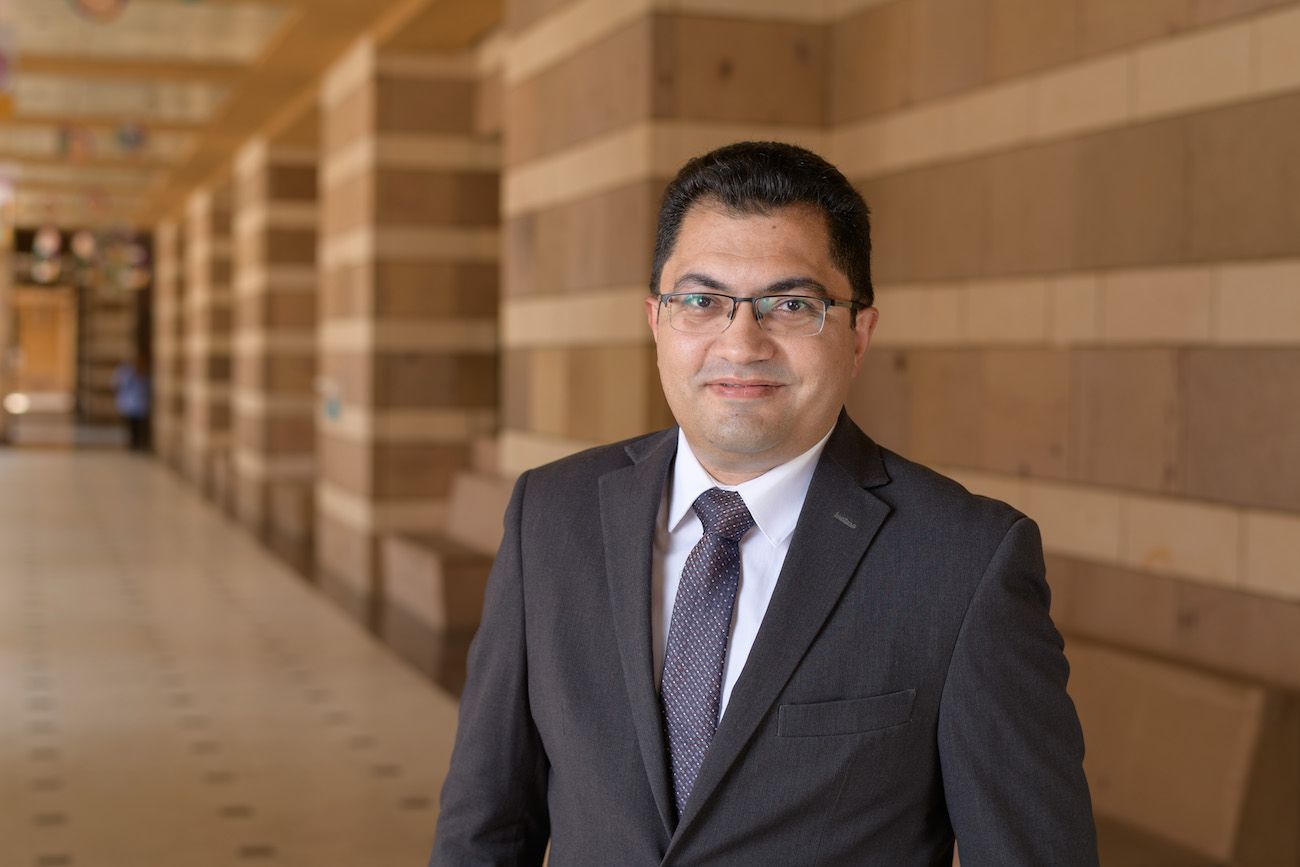
Dr. El-Dawlatly received his PhD from Michigan State University. With 80+ publications in brain–computer interfaces, his research applies machine learning and signal processing to invasive and non-invasive neural interfaces and visual prostheses.
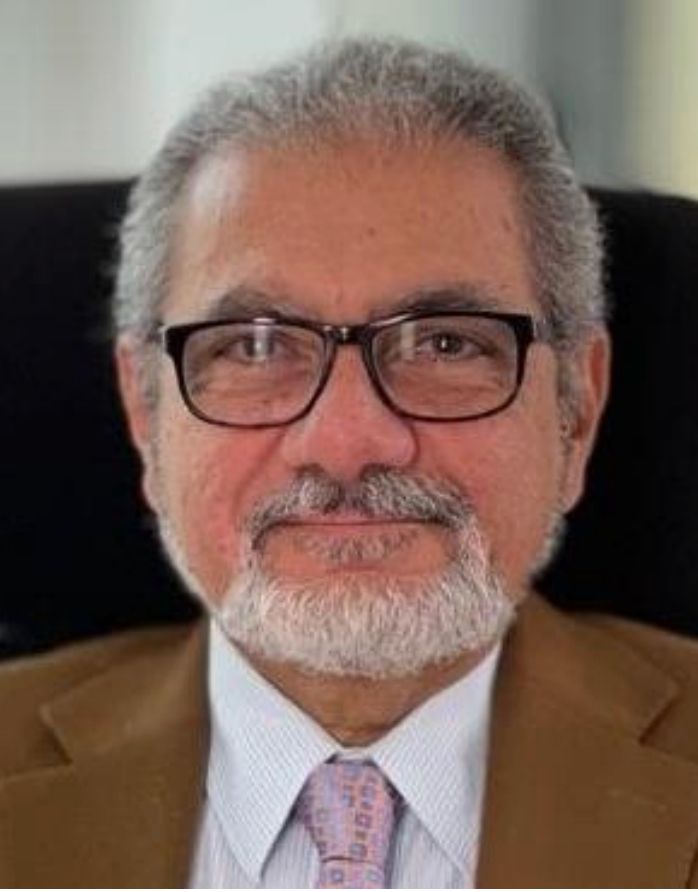
An educator, engineer and inventor, Dr. Tantawy advises the Egyptian Minister of Communications & IT. A former IBM CTO with 34 inventions and 100+ papers, he has chaired 14 international IEEE, ACM and IFIP conferences.
